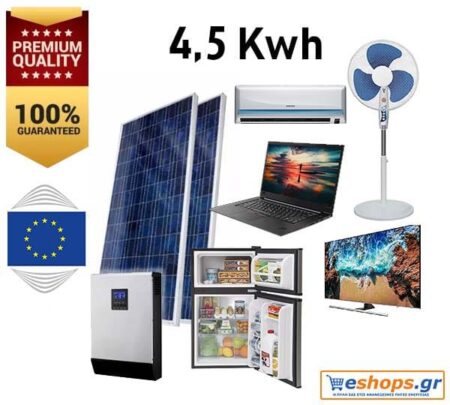




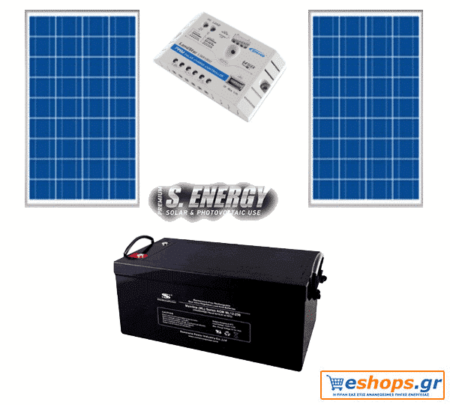
Autonomous photovoltaic system for refrigerator 12V / 65watt - 75 watts
Autonomous photovoltaic kit / package for small refrigerator 65-75 watt / 12V or 220V by adding inverter
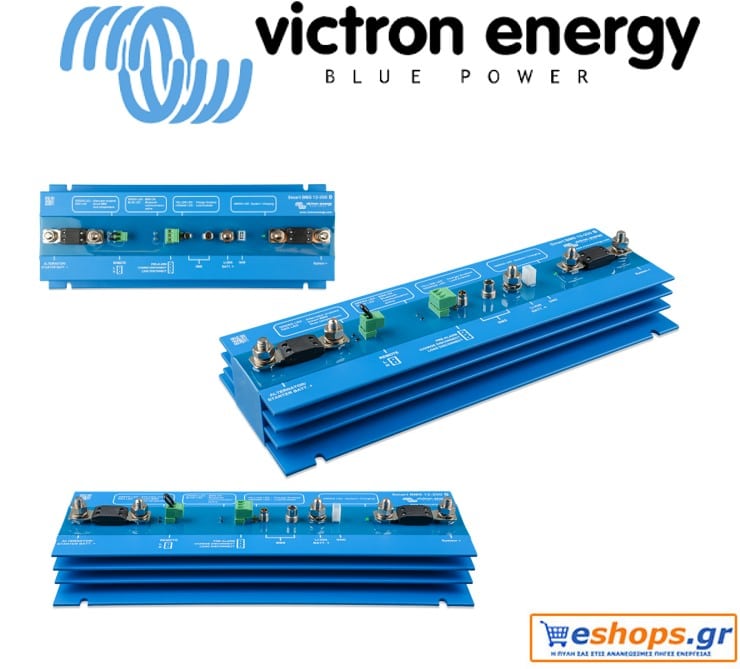
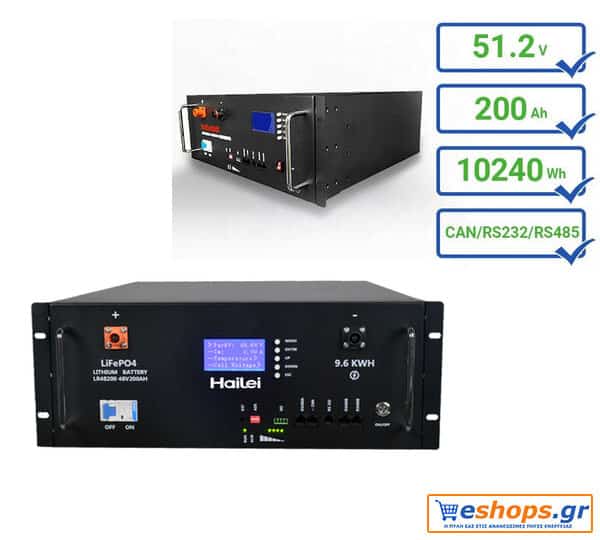
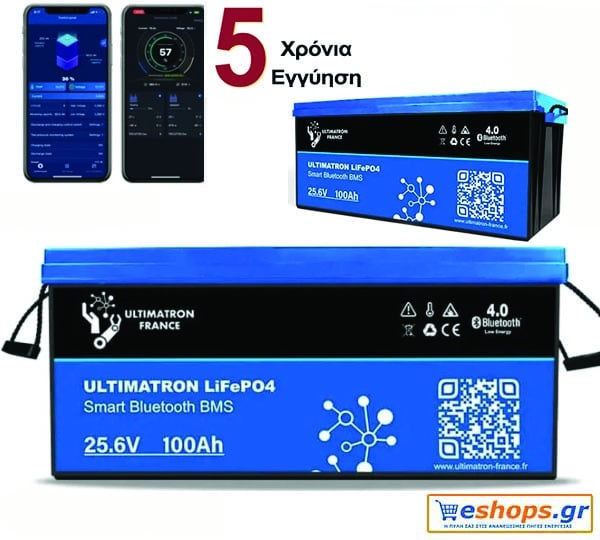
BMS 12/200 for 12,8 Volt Lithium-Iron-Phosphate batteries Specially designed for vehicles and boats
The MS 12/200 ensures:
Why you need a Battery Management System (BMS):
1. An LFP cell will be destroyed if the voltage across the cell drops to less than 2,5V.
2. An LFP cell will be destroyed if the voltage across the cell rises to more than 4,2 V. Lead-acid batteries will eventually also be destroyed when they are deeply discharged or overcharged, but not immediately. A lead-acid battery will recover from total discharge even after being left in a discharged state for days or weeks (depending on the type and brand of battery).
3. The cells of an LFP battery do not automatically balance at the end of the charge cycle. The cells of a battery are not 100% identical. Therefore, when recycled, some cells will be fully charged or discharged sooner than others. Differences will increase if the cells are not balanced/balanced from time to time.
In a lead-acid battery a small current will continue to flow even after one or more cells are fully charged (the main effect of this current is the decomposition of water into hydrogen and oxygen). This current helps to fully charge other lagging cells, thus equalizing the state of charge of all cells.
However, the current flowing through a fully charged LFP cell is almost zero, and therefore lagging cells will not be fully charged. Over time the differences between cells can become so extreme that even though the overall battery voltage is within limits, some cells will be damaged by over or under voltage.
Therefore, a LiFePO battery must be protected by a BMS that actively balances individual cells and prevents under- and over-voltage
|
Features |
Small BMS |
VE.Bus BMS V2 |
VE.Bus BMS |
Lynx Smart BMS |
Smart BMS CL 12/100 |
Smart BMS 12/200 |
| System voltage | 12, 24 or 48 V | 12, 24 or 48 V | 12, 24 or 48 V | 12, 24 or 48 V | 12 V | 12 V |
| System connection | No | No | No | 500 A | No | 200 A |
|
Alternator port |
No |
No |
No |
Yes (Alternator ATC mode) |
100 A |
100 A |
| battery monitor | No | No | No | Yes | No | No |
| Bluetooth | No | No | No | Yes | Yes | Yes |
|
data communication |
No |
VE.Bus communication with inverter/charger(s) and a GX device. |
VE.Bus communication only directly with inverter/charger(s), not with a GX device. |
VE. Can communicate with a GX device
NMEA2000 |
No |
No |
| Control via GX device (DVCC) |
No |
Yes |
No |
Yes |
No |
No |
| Allowed to discharge terminal(s) | High/free floating 1 A | High/free floating 1 A | High/free floating 2 A | relay
0.5 A |
High/free floating 10 mA | High/free floating 10 mA |
| Allowed to charge terminal(s) | High/free floating 10 mA | High/free floating 10 mA | High/free floating 10 mA | relay
0.5 A |
High/free floating 10 mA | High/free floating 10 mA |
|
Pre-alarm terminal(s) |
Free floating/high 1 A |
Free floating/high 1 A |
Free floating/high 1 A |
Programmable relay
2 A |
Free floating/high 1 A |
Free floating/high 1 A |
|
Remote on/off terminal |
Yes |
Yes |
No |
Yes |
Yes |
Yes |
| Auxiliary output | No | Yes, 1 A | No | Yes, 1.1 A | No | No |
| Auxiliary input | No | Yes, 1 A | No | No | No | No |


| Weight | 3 m. |
|---|
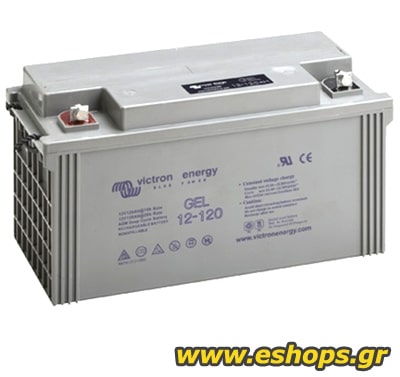
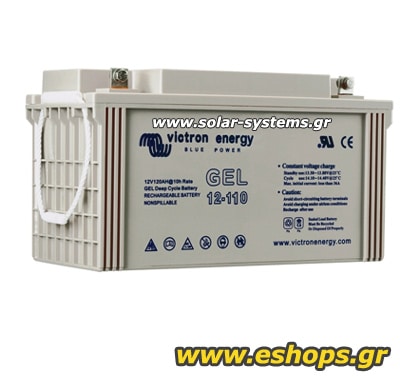
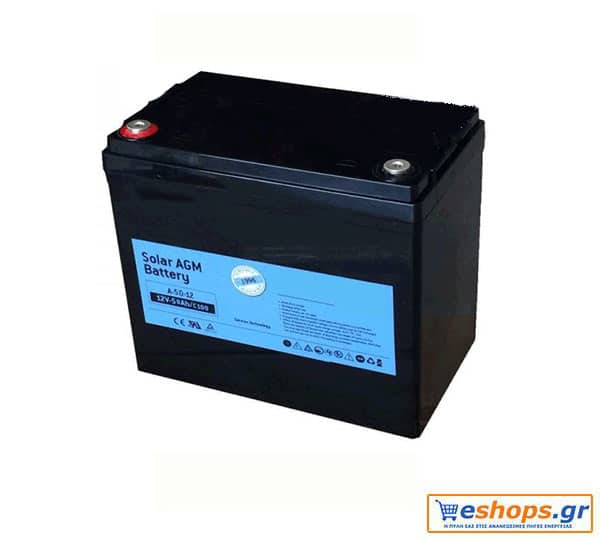
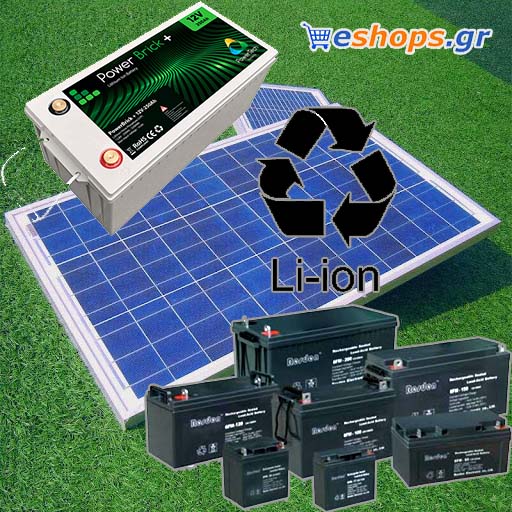
130AH C20 / 120AH C10- Gel battery for autonomous photovoltaic systems.
| AGM range batteries are characterized by very low internal resistance, which makes them particularly suitable for high-intensity discharge applications such as inverters, propulsion motors and starting motors. The range of GEL models provides the best deep cycle durability and longer life. |
Price without VAT
Pre-order
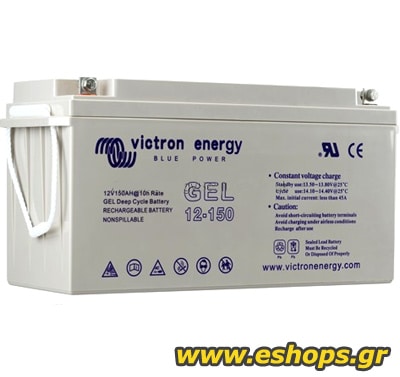
165AH C20 / 150AH C10- Gel battery for autonomous photovoltaic systems.
| AGM range batteries are characterized by very low internal resistance, which makes them particularly suitable for high-intensity discharge applications such as inverters, propulsion motors and starting motors. The range of GEL models provides the best deep cycle durability and longer life. |
Price without VAT
Pre-order
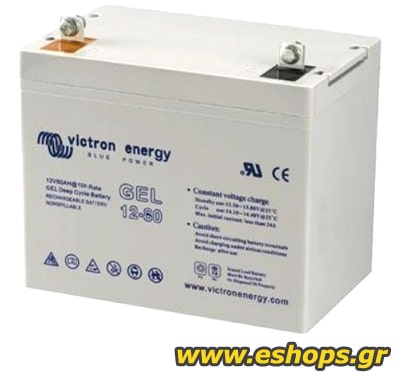
| AGM range batteries are characterized by very low internal resistance, which makes them particularly suitable for high-intensity discharge applications such as inverters, propulsion motors and starting motors. The range of GEL models provides the best deep cycle durability and longer life. |
Price without VAT
Pre-order
110AH C20 / 100AH C10- Gel battery for autonomous photovoltaic systems.
| AGM range batteries are characterized by very low internal resistance, which makes them particularly suitable for high-intensity discharge applications such as inverters, propulsion motors and starting motors. The range of GEL models provides the best deep cycle durability and longer life. |
Price without VAT
Pre-order
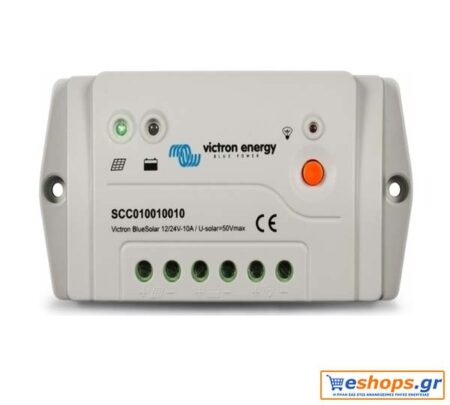
The BlueSolar PWM-Pro series is ready to use with the default settings. It has three stages of battery charging (Bulk, absortion, float), protection against short circuit and over-voltages as well as from reverse polarity of the solar panels and / or the battery. These unique features make the BlueSolar PWM -Pro 12 / 24V-10A controller one of the most valuable controllers on the market. It can also be programmed easily, quickly and correctly with the help of the integrated BlueSolar Pro remote control panel.
Specifications
| Manufacturer | VictronEnergy |
|---|---|
| Charge Controller Type | PWM |
| System Voltage | 12V, 24V |
| Connectivity | Fananzeige Pro Fanbedienpanel, PWM-Pro with USB Interface Cable, Temperature Turbines |
| Permitted Humidity | max. 98% (not condensing) |
| IP Protection | IP30K |
| Charging Current max. | 10A |
| Standby Self-Consumption | 10mA |
| Max. Voltage Solar Module | 28V / 55V |
| Max. Current Solar Module | 10A |
| Number of Charging Outputs | 1 |
| Ambient Temperature | -20 ° C - + 50 ° C |
Price without VAT
Pre-order
Advanced finding of optimal power efficiency in case of partial shading
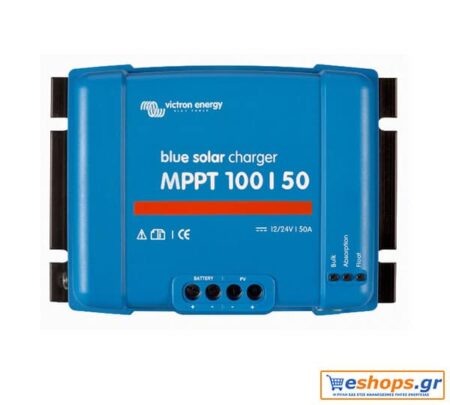
Victron battery chargers, thanks to fast technology maximum power point (MPPT) from photovoltaic panels, even under shading conditions, promise the fastest possible charging of the batteries of the autonomous photovoltaic system, based on the safety of the equipment and ensuring the required charging voltage of the batteries for their proper and long-term proper operation.
Specifications
| BlueSolar Charge controller | MPPT 100/50 |
| Battery Voltage | 12 / 24V auto select |
| Rated charging current | 50 A |
| Nominal PV Power, 12 V 1a), 1b) | 700 W (MPPT range 15 V to 70 V resp. 95 V) |
| Nominal PV Power, 24 V 1a), 1b) | 1400 W (MPPT Bereich 30 V to 70 V bzw. 95V) |
| Maximum PV open circuit voltage | 100 V |
| Peak efficiency | 98% |
| Self-consumption | 10 mA |
| Charge voltage 'absorption' | 14,4 V / 28,8 V (adjustable) |
| Charge voltage 'float' | 13,8 V / 27,6 V (adjustable) |
| Charge algorithm | multi-stage adaptive |
| Temperature compensation | -16 mV / ° C resp. -32 mV / ° C |
| Protection | Battery reverse polarity (fuse) / Output short circuit / Over temperature |
| Operating temperature | -30 ° C to +60 ° C (full rated output up to 40 ° C) |
| Humidity | 95% non-condensing |
| Data Communication Port | VE.Direct |
Pre-order
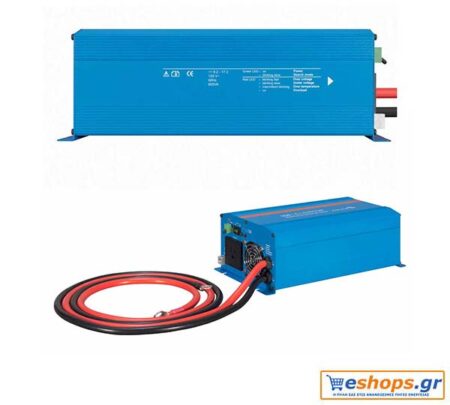
Victron inverters developed for professional use. The Phoenix range of inverters is suitable for the widest range of applications. The design criteria were to produce a pure sine inverter with optimized efficiency but no performance compromises. Using HF hybrid technology, the result is an excellent quality product with compact dimensions, light in weight and able to provide power, without problems, to any load.
Specifications
| Inverter off | |
|---|---|
| Power (W) | 700 |
| Manufacturer | VictronEnergy |
| Input Voltage (V) | 48V DC |
| Output Voltage (V) | 230V AC |
| Performance level (%) | 94 |
| IP protection | IP20K |
| Weight (kg) | 6.5 |
| Warranty (years) | 5 |
| Other Information | Automatic transfer switch, Remote on-off switch |
Pre-order
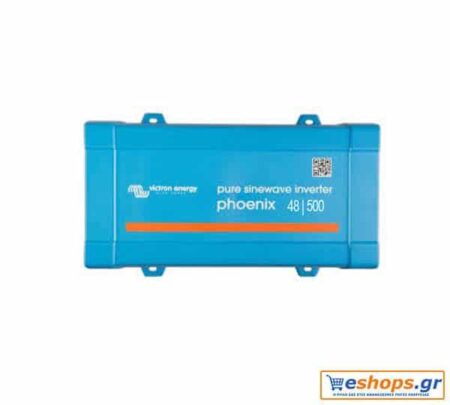
Schuko 48V / 500VA inverters with pure sine wave output, high power and efficiency.
The combination of high frequency and linear frequency ensures the maximum possible benefit. nverter (inverter) Victron of Dutch origin, for autonomous systems (photovoltaic, wind, hybrid). Pure sine, high performance and with high peak power at 900W. Suitable for a wide range of applications, capable of providing power, without problems, to any load. Excellent professional quality compact and lightweight. With the possibility of connection in parallel and three-phase device.
Specifications
| Inverter off | |
|---|---|
| Power (W) | 400 |
| Manufacturer | VictronEnergy |
| Input Voltage (V) | 48V DC |
| Output Voltage (V) | 230V AC +/- 3% |
| Performance level (%) | 91 |
| IP protection | IP21K |
| Weight (kg) | 3.9 |
| Warranty (years) | 5 |
| Other Information | ECO mode, Remote on / off, LED diagnosis, Dynamic cut off |
Pre-order
Victron charge regulator with internal temperature sensor. The BlueSolar PWM-Light 48V controller also includes a socket for connecting devices, automatically shutting down before the battery is completely discharged, thus protecting it from premature wear. With PWM technology system provides three-stage charging (Bulk, absortion, float). This way your battery is charged in the best way resulting in a much longer lifespan of itself and your system! Provides protection against short circuits and overvoltages as well as reverse polarity of solar panels or the battery.
Specifications
| Manufacturer | VictronEnergy |
|---|---|
| Charge Controller Type | PWM |
| System Voltage | 48V |
| Permitted Humidity | max. 95% RF (not condensing) |
| IP Protection | IP20K |
| Charging Current max. | 20A |
| Standby Self-Consumption | 10mA |
| Max. Voltage Solar Module | 100V |
| Max. Current Solar Module | 20A |
| Number of Charging Outputs | 1 |
| Ambient Temperature | -20 ° C - + 50 ° C |
Pre-order
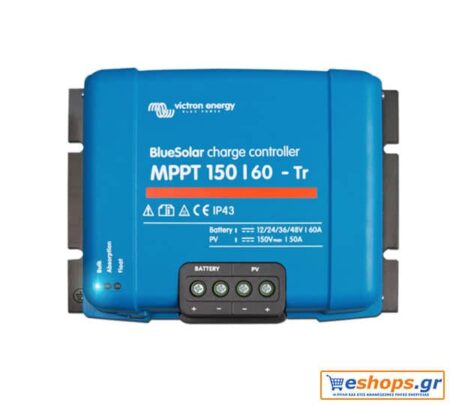
Charging Regulator Victron Blue Solar MPPT 75/50 12V / 24V
Price without VAT
Pre-order
Advanced finding of optimal power efficiency in case of partial shading
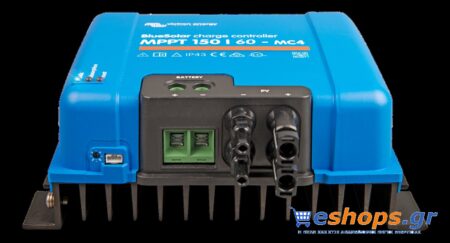
Victron battery chargers, thanks to fast technology maximum power point (MPPT) from photovoltaic panels, even under shading conditions, promise the fastest possible charging of the batteries of the autonomous photovoltaic system, based on the safety of the equipment and ensuring the required charging voltage of the batteries for their proper and long-term proper operation.
Specifications
| Blue Solar MPPT 150/60 Tr |
|
| Battery Voltage | 12/24/48 V Auto Select (software tool needed to select 36V) |
| Rated charging current | 60 A |
| Maximum PV power 12V 1a, b) | 860W |
| Maximum PV power 24V 1a, b) |
1720W |
| Maximum PV power 48V 1a, b) | 3440W |
Pre-order
The Multi is a powerful sine wave inverter, a sophisticated battery charger with adaptive charging technology and a high-speed AC transfer switch, in a single compact box. Multi prevents overloading of a source with limited AC voltage. In the event of a fault in the network or if the power is disconnected from the ground source or the generator, the inverter inside the Multi is automatically activated and takes over the power supply of the connected loads.
Price without VAT
Pre-order
Specifications
| Charge Controller Type | PWM |
|---|---|
| System Voltage | 12V, 24V |
| Permitted Humidity | max. 95% RF (not condensing) |
| IP Protection | IP20K |
| Charging Current max. | 10A |
| Standby Self-Consumption | 10mA |
| Max. Voltage Solar Module | 28V / 55V |
| Max. Current Solar Module | 10A |
| Number of Charging Outputs | 1 |
| Ambient Temperature | -20 ° C - + 50 ° C |
Pre-order
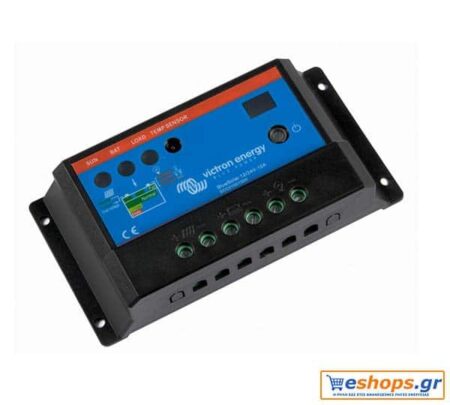
Victron charge regulator with internal temperature sensor. It has three stages of battery charging (Bulk, absortion, float), protection against short circuit and over-voltages as well as from reverse polarity of the solar panels and / or the battery.
| Manufacturer | VictronEnergy |
|---|---|
| Charge Controller Type | PWM |
| System Voltage | 12V |
| Permitted Humidity | max. 95% RF (not condensing) |
| IP Protection | IP20K |
| Charging Current max. | 5A |
| Standby Self-Consumption | 10mA |
| Battery Voltage | 12V, 24V |
| Load Current max. | 5A |
| Max. Voltage Solar Module | 28V / 55V |
| Max. Current Solar Module | 5A |
| Number of Charging Outputs | 1 |
| Ambient Temperature | -20 ° C - + 50 ° C |
Pre-order
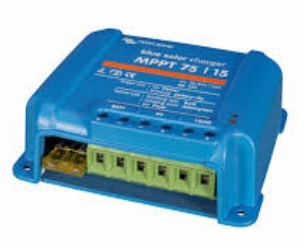
Victron battery chargers, thanks to fast technology maximum power point (MPPT) from photovoltaic panels, even under shading conditions, promise the fastest possible charging of the batteries of the autonomous photovoltaic system, based on the safety of the equipment and ensuring the required charging voltage of the batteries for their proper and long-term proper operation.
Specifications
| Door Design | Victron BlueSolar MPPT 75/15 |
| Part# | SCC010015050R |
| battery voltage | 12/24 volt auto select |
| Rated charging current | 15A |
| Maximum PV power, 12V (a, b) | 200 W (MPPT range 15V to 70V resp. 95V) |
| Maximum PV power, 24V (a, b) | 400 W (MPPT range 30V to 70V resp. 95V) |
| Automatic load disconnect | Yes, maximum load 15A |
| Maximum PV open circuit voltage | 75V |
| Peak efficiency | 98 % |
| Self consumption | 10mA |
| Charge voltage 'absorption' | 14.4V / 28.8V |
| Charge voltage 'float' | 13.8V / 27.6V |
| Charge algorithm | Multi-stage adaptive |
| Temperature compensation | -16 mV / ° C resp. -32 mV / ° C |
| Continuous / peak load current | 15A / 50A |
| Low voltage load disconnect | 11.1V / 22.2V or 11.8V / 23.6V or BatteryLife algorithm |
| Low voltage load reconnect | 13.1V / 26.2V or 14V / 28V or BatteryLife algorithm |
Pre-order
Charger Blue Power IP 67 fully protected: waterproof, with protection against vibration and ignition
The Blue Power IP67 charger is not at risk from water, oil or dirt. The housing is made of cast aluminum and the electronic components are made of resin molds.
Price without VAT
Pre-order
Victron inverters developed for professional use. The Phoenix range of inverters is suitable for the widest range of applications. The design criteria were to produce a pure sine inverter with optimized efficiency but no performance compromises. Using HF hybrid technology, the result is an excellent quality product with compact dimensions, light in weight and able to provide power, without problems, to any load.
The Victron Energy Phoenix series are pure sine converters, top quality construction and very high efficiency. With the application of Hybrid HF Technology, these inverters succeed in successfully combining the highest degree of efficiency with the ability to support loads with high starting current without problems. Suitable for autonomous systems and in cases where uninterruptible power supply is needed.
Price without VAT
Pre-order
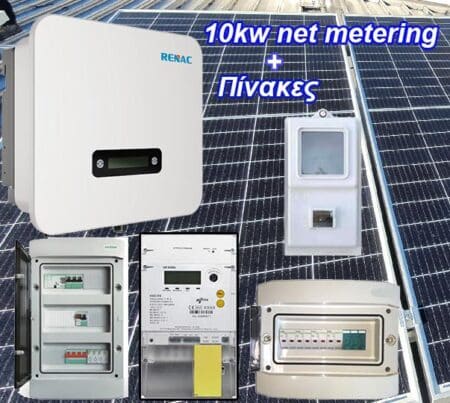
10 Kwatt photovoltaic on roofs with interconnected to PPC photovoltaic system with installation
See all offers here
Pre-order
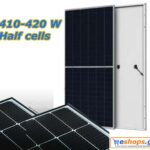
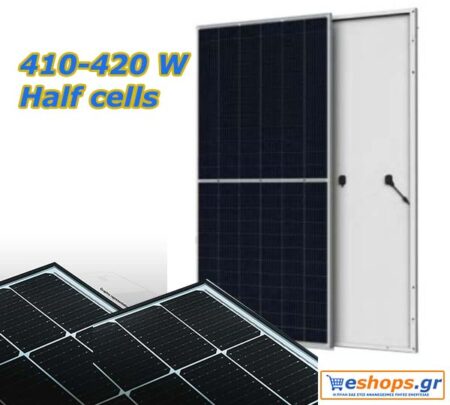
410-WATT-420-WATT-
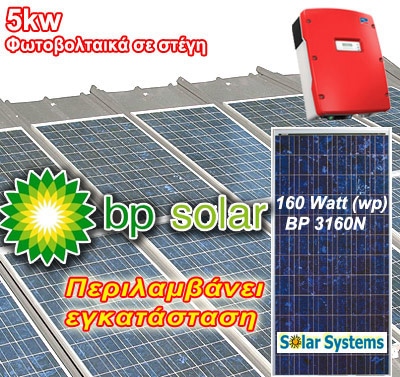
5kw with photovoltaics on roofs with photovoltaics and installation Additional offers here
Pre-order
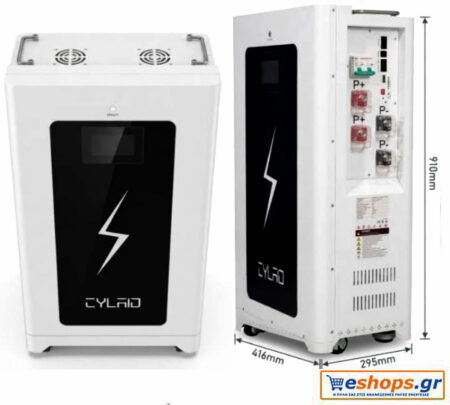
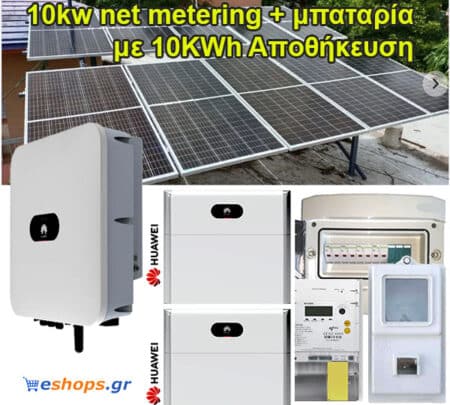
Net-metering 10kw with 10kwh lithium battery for storage with PV 460 WATT and Panels Complete AC/DC package for energy compensation (10 year inverter warranty)
Net metering 10kw with 10kwh lithium battery ( They produce in the summer in southern areas 40-50kw daily and about half or 1/3 in Winter) 12.000 - 16.000 kw averaged per year in Southern regions.
Price without VAT
Pre-order
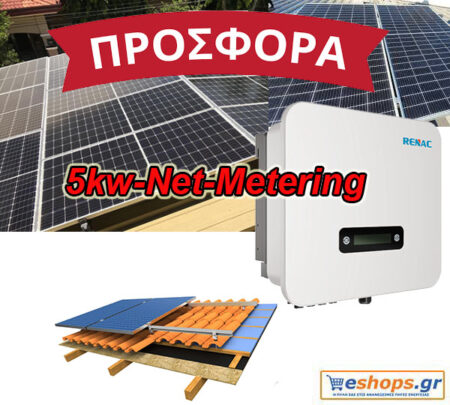
Net metering 5kW photovoltaic package offer
11 Photovoltaic panels 450 watts
Network inverter Renac NA 5000 DS (7500WATT max) 10 Year Warranty
Tile roof supports for 11 PV panels.
See the new net billing packages at special offer prices HERE
Photovoltaics 5KW net-billing complete tile roof packages from 2450 euro + VAT
Photovoltaics 5KW net-billing with Battery-Storage complete tile roof packages from 5150 euro + VAT
Pre-order
Autonomous photovoltaic kit / package for small refrigerator 65-75 watt / 12V or 220V by adding inverter
Pre-order
Pre-order
SMA IV SB 5.0-1AV-41 5000 W Photovoltaic Inverter Single Phase. Suitable inverter for net metering, photovoltaic on roofs, home and professional photovoltaic systems.
Pre-order
See the new net billing packages at special offer prices HERE
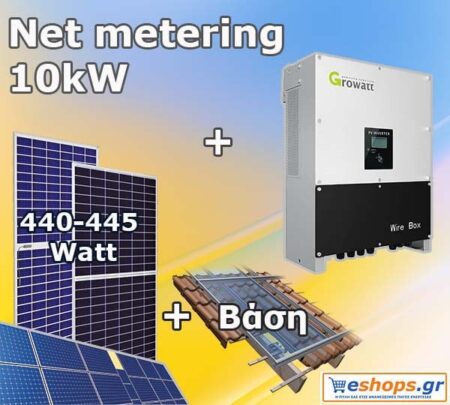
Photovoltaics 10KW net-billing complete packages with panels + Bases for tiled roof from 4700 euro + VAT
Photovoltaics 10KW net-billing with Battery-Storage complete packages with boards + bases for tile roof from 8999 euro + VAT
Pre-order
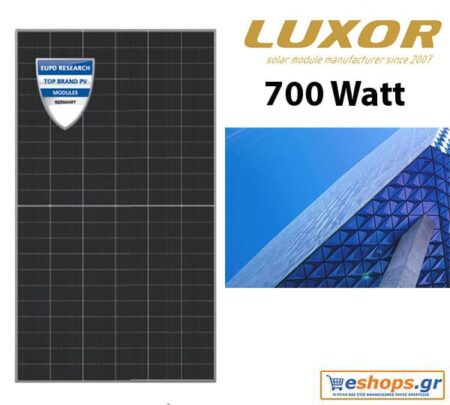
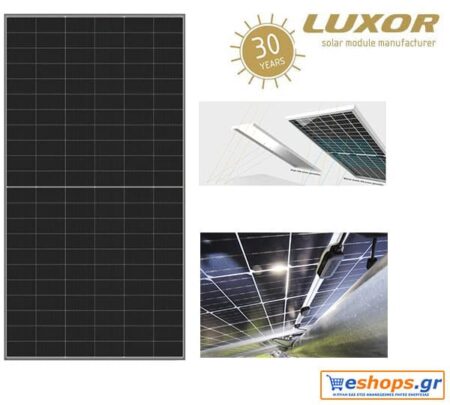
Photovoltaic Luxor LX-700TC-M/132 Bifacial N-Type TopCon Glass-Glass (Mono)-Germany
Suitable for net billing, net-metering, home PV, parks and PV plants
Minimum quantity 9 pieces
In stock
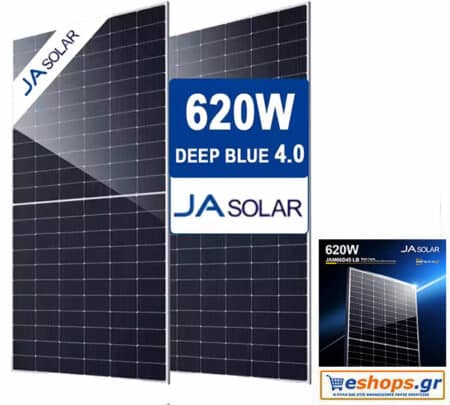
620watt – Photovoltaic panel JA Solar 620W MONO JAM66D45-620/LB Bifacial N-Type TopCon Glass-Glass
Suitable for net-billing, photovoltaics in homes, businesses, parks and photovoltaic stations, autonomous systems.
Minimum quantity 9 pieces
In stock