The Best Batteries for Photovoltaic Systems: Types and Features for Homes and Businesses
The Best Batteries for Photovoltaic Systems Όταn miλάμε for mebatteries in fautovoltaic σsystems, mπainουwith στηher heart energy: h σωσfh αmonkeyεhow are youνει όλη the dktime tothis oneομone and σthen oικονομία, εeither έχeς σpiτι, businessίρηση, hotelthe or touristό catάλυHowever,.
ΔεIt is a secret—orChoosing the right battery μπdefεto determinedίσει performance, lifespan of the system and επιτyesa of the investment.
Let's just say it: cfor most modern photovoltaic, The μπyeahlithium ions LFP / LiFePO₄ is the best choice αthis dayιγμor. Δίνthν high performance, they liveλy, εfiberI amsfαleis, and δεν κοFίζοso much aκquarrel with meκροpreεσμa as long as theι lead batteries.
For σπίwhata, the 5–20 kWh systems is usually enoughWhile οι businesses debtιάζοthey are μe.gαλύτεres, modular solutionσto whomυ φτabove αfrom 30 kWh μέno hundreds of kWh.
Τsubι battery—τι ταιριάhe lives σε ποionThe LFP/LiFePO₄ ταIt's raining.τι in a spaίwhat and εoperations requiring everyday use. Adejeει, yese okoh myθmo εblindρτισof, πaizει with the heatοκρAsia and not badάit's easyλα.
Το moνthe "withίοis the exacthigher initial cost, αλλά ρεαλιστtake outει τα his money.Η NMC lithium haveεvery much υhigh energy density—chrήwhere the space isς counts πandιscuterthe oneeverythingα.
Vevaιah, he wants to be closerτtional thermal management και, πλyes, the LFP they haveandgive αρkeτthe ground.Οi mπαtheρίεs mlead AGM/GEL they still play in mshort off-grid ή country houses, mainly αthere is norcει Noκετός προsubaccountism. Είναι βαριέq, δεν ζvery much, καthey have μokρή usable capacity.
You choose them.only if the beginningMr Mrto is το monαδtional you and meρitiriο.Flow batteries theιryάζουν in max.άLa projects, εkewhat is itυ yearειάζεtheι νa depositηkeύειas aοanother oneργειa cια πολλs ώρs, αλλά in small συστήματα itν it isι praccτokές.Sodium ion and solid state είνc technologies which is ifεgoοy, aλλά γk thisoh, δεν είναι η πρώτη επprayer for τα οικyakout of lightensuresβολταϊκά.Βαphysical characteristics-What πit has to πρsexεbisCapacity (kWh): Tόenergy αstoreIs the battery dead?
For homeτι, 5–10 kWh covers basics aνangεas the νύχthe, 10–20 kWh your dinει greater autonomy ή backup for frequent vacations.Power (kW): Phow many loads it can supply simultaneously.Μk μ10 kWh battery with 7–10 kW ιstrength may σηκώσει instantaneous loadspumps, air conditioning, professionala machines—εmaybe with 3 kW πandιhorizonσc.Depth of discharge (DoD): Dit shows τthe battery percentage which is it canς to useήσεbis.
The LFP inclνήyou allow megaλύbest DoD, οι μlead θέluν more "conservativeή"x"ρήση για to ζήyou.Cycle performance: As long as πιthe one near 100% τόσthe the καλlastο. With 95%, every 10 kWh chargedbis takebis 9,5 kWh back.
For daily use, κράτα above αAP 90 %.Life cycles & warranty: Noν Noκit is to behereξεin the morningόσa year they give warranty.Searchε για guaranteed cycles, υplanned capacity, what throughput permissionέπεtai, temperatureoh ohrya and bι if theοποθετείται σbones.
Inverter compatibility: The battery must work with the hybrid inverter yours ή with the existing σsystem.
For καinurio setup, I preferάwith DC-coupled, while for uploadθhalfor to πanother systemμa, an AC-coupled mcan εfiberι πιο απλor lknowledge.Security and certifications:
The Best Batteries for Photovoltaic Systems
Rotα the cataceκευασfh a certificationsIEC 62619, CE, UN38.3, UL9540.Σthorough study, ventilationς, protections and τοplacement have a signalσίa. EPA commentsif that The BESS (Battery Energy Storage Systems) assist το ηλεctρokό δίctυο, but ποτέ I don't know.χνάμε την insάleια, ειown lόI am fire.αlithium ions: standards and correct installation is apaραίtta.
Ποια είναι η κbetter "total" εpiaccountor for spίwhatα;Clearly, LFP / LiFePO₄. Έχει μακρstinkίa, εit is more ασφaliς από άlolες χdayικs εsickειlithium, and durableει dailyό fordoma-xεfordωμα.
Σaccording to meby Oak Ridge National Laboratory study, if an LFP “escapes”γει" thermalά, η reaction itν isνoh so much έdonη as long asιAs NMC—The tleυtheίs αpeiloν with fire or explosion. Δit doesn't mean how LFP is invulnerable, but γι' αυτthose I prefertheν σtheν αstorage energy.
Indicative εpilogecapacity for homeαSmall house: 5–8 kWhΜεσαίο spίwhat with 5–8 kWp photovoltaic: 8–15 kWhSpyτι with a heat pump or electric car: 15–25 kWh
Backup for youfrequent power outages: 10–30 kWh, with highor output powerOff-grid cottage: LFP with backup generator ή αrkeτa big oneLo photoοboλταiconic
For businesses—τι to doοsexεbisΔεn koιthe only the capacity.Pasίlive a role:– Peak shaving (peak reduction), Ότif are you buying a car?ηn energy κc τη yearηuseisς αργotherα,- Backup critical loads,– Ttwo-phase operation,–Energy management system (EMS),- PIsecurity and certifications,– Sixπλωnote and modularity,
Εprofessional maintenance and monitoring.Indicative scales for businessesSmall office/store: 20–50 kWh for aself-consumption and backupCafe/restaurant/small hotel: 50–150 kWh for mereduction of bills and backupCrafts/refrigerators/warehouse: 100–500+ kWh for peak shaving, backup and load stabilization
Large industryία: 500 kWhMWh for youenergy management and flexibilityΣυνmanner modular LFP cabinets/racks with three-phasethe inverter and EMS inclμφέpυν πεryσσότandο. Αν Do you want big?λεas storage hours and έhasas a space, examinesς flow batteries, since the DOE λέe how to increaseοUV (μadultsουν) theν αcravedυτtechnical abilitythatα depending on the size of the tanks.
The Best Batteries for Photovoltaic SystemsA “paggressive" capacity calculationΠόση μfatherία debtιazesc; See ensures έτσι:Χhourly rate = ηdaily energy that wills /DoD/performanceΘες νa coverbis 8 kWh every night with LFP (about 90% DoD, 94% yield);8 / 0,90 / 0,94 ≈ 9,5 kWhΔkyou say battery of the order of 10 kWh.The ίδια with lead batteries you will needάζbeinghad a much larger nominal capacity.Τα πιο σyesά Mistakes1. Κοιτάς only kWh andι ignorantείς the power (kW).
2. B.atAryan who does not ταit is raining with the power inverter /BMS.
3.Agnoh yesas a guarantee cycloneαlook aroundιfor years.
4.locationετin σε space with bad temperaturea kαI amquarrel.
5.Subdimensionsογin for backup.
6. Αναμειγνύeς brands, agains/news batteryies without approval.
7. Not κifεbis energy study For tM realή consumption.
Final conclusionFor σpiτια κHey little oneύ/middleoh myεGethsemaneas businesses, μια LFP / LiFePO₄ battery from reliablethe etheιρεία, compatible with inverter and with diαapparent warranty, it isαι ensures "σίγοwater χNoτί”.
For homes: 8–15 kWh εinαIt's the sweet spot.For those who haveν ifheat, EV or θεAs a serious backup: 15–30 kWh.For businesses: startίνα με εenergetic perλυση, gocνε σwith modular LFP, EMS, three-phaseά and extension.
Η better battery is not theτε η greater, neither the cheapest. Εshe is the one who notif youωστa with tthe photovoltaic, the profile consumption, το backup yours and ensures budget σου.
Types of Batteries for Photovoltaics
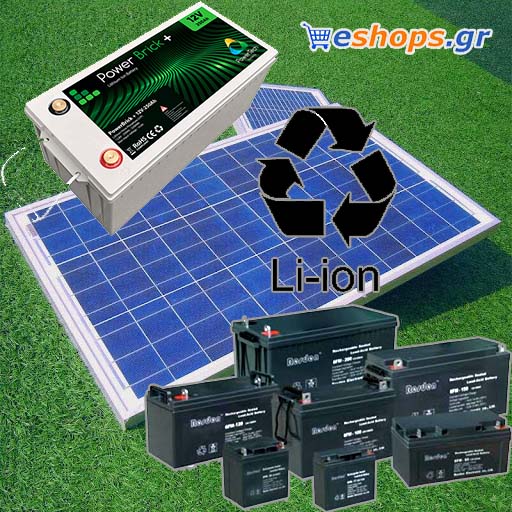
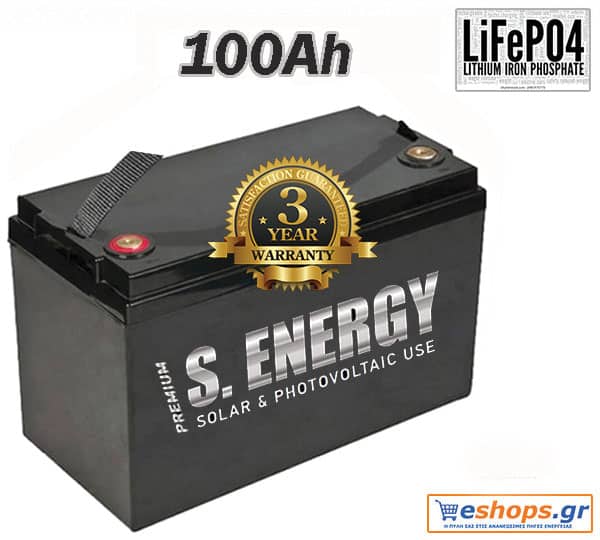
Batteries Lithium (Li-ion-lifepo4): They stand out for their high energy density, long lifespan and efficient charging-discharging. They are ideal for home applications and professional spaces that need reliable and compact storage.
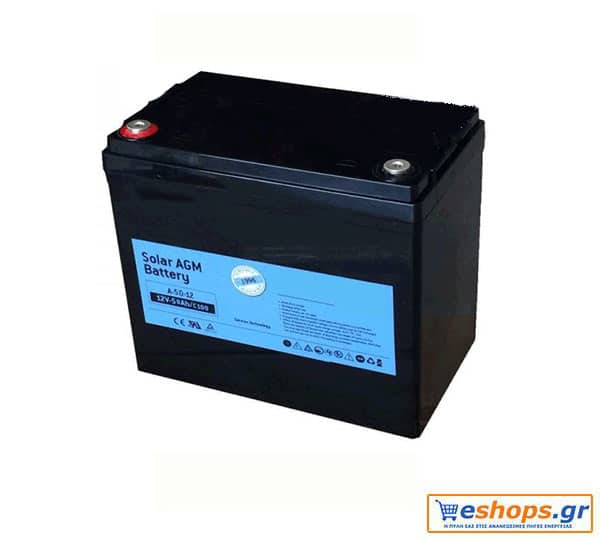
Lead-Acid Batteries: Traditional and economical, suitable for applications with a smaller budget. The sealed AGM or GEL type offer less maintenance and better resistance to charging cycles.
Nickel-Cadmium (NiCd) Batteries: A more durable option in extreme temperatures, but less popular due to environmental restrictions and lower energy density.
Key Features for Choosing a Battery
Capacity (Ah): It determines how much energy the battery can store and affects the autonomy of the system.
Performance Level: Charging and discharging efficiency affects the actual energy available.
Life Cycles: The number of charge-discharge cycles before the battery loses a significant percentage of its capacity.
Safety and Maintenance: Lithium batteries require less maintenance and have better safety features compared to traditional lead-acid batteries.
Applications of batteries and energy storage systems in Homes and Businesses
The Best Batteries for Photovoltaic Systems: For homes and small businesses, the lithium batteries offer better performance in a small space and with lower weight. In larger installations such as hotels and tourist accommodations, lithium batteries can be combined with energy management systems (BMS) for optimal operation and economy. Lead-acid batteries remain an option for lower initial cost, but with increased maintenance requirements and shorter life.
Overall, the selection of a battery must be based on a detailed study of energy needs, budget and environmental conditions, to ensure maximum performance and sustainability of the photovoltaic system.
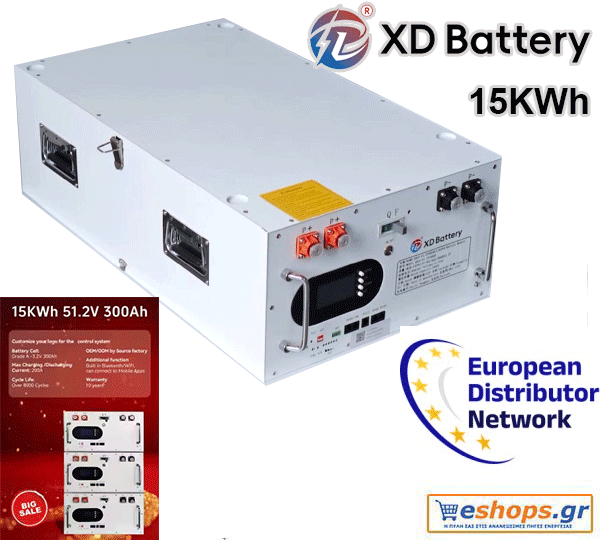
For photovoltaic energy storage applications in homes, businesses, hotels and tourist accommodations, the market has now almost universally turned to batteries. LiFePO4 / LFP (Lithium Iron Phosphate) as the best technology for stable energy storage. The main reasons are the better safetyThe very long lifespan, the lowest cost per cycle and reliability in everyday use.
The main types of batteries for photovoltaics
1. LFP / LiFePO4 — The best choice today
Ideal for:
housing
hotels
Airbnb
commercial buildings
net billing / self-consumption
backup in case of power outages
Advantages:
6.000–10.000 life cycles
duration 15–20 years
very low fire risk
allow for high depth of discharge (90–100%)
excellent for daily charging/discharging
low operating costs in the long term
Disadvantage:
heavier and bulkier than NMC (not a big deal in fixed installations)
2. NMC (Nickel Manganese Cobalt)
They are used most:
in electric cars
when there is very limited space
Advantages:
higher energy density
smaller size
Disadvantages:
shorter lifespan
higher thermal risk
higher cost per cycle
For large hotel or commercial projects today they are usually avoided in favor of LFPs.
hotel needs high power (air conditioning, pumps, kitchens)
Life cycles
Very important KPI.
Good system:
6000 cycles
warranty 10–15 years
DoD (Depth of Discharge)
How much % of the battery can be used.
Good level:
90-100%
BMS (Battery Management System)
The “brain” of the battery:
protection
balancing
temperatures
communication with inverter
It must be of high quality.
What is recommended per application
Application
Recommended technology
Capacity
Residence
LFP
10–20 kWh
Airbnb
LFP
15–40 kWh
Small hotel
LFP rack/cabinet
50–150 kWh
Big hotel
HV LFP ESS
200 kWh – 2 MWh
Business with peak shaving
LFP HV
100–500 kWh
Comparison of technologies and solutions
Feature
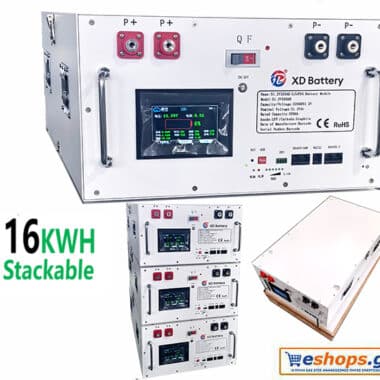
Smart Lifepo4 battery 25.6V 200ah
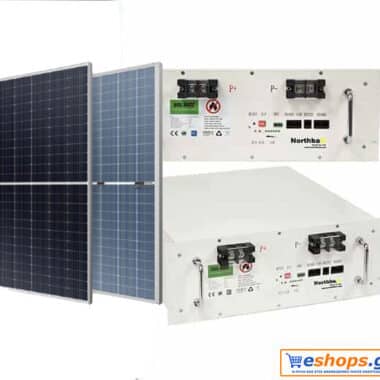
LiFePO4 Battery / 5kWh 48V
Solar LiFePO4 Battery 215kwh Cabinet Commercial and Industrial 100kw Energy Storage System
Technology
LFP
LFP
LFP
Use
Premium homes/off-grid
Residences/Airbnb
Hotels & businesses
Lifetime
Very high
High
Very high
Scalability
Medium
Medium
Very high
Backup function
Excellent
Good
Professional level
Cost
High
Economical
Enterprise
Conclusion
By 2026, almost all serious storage installations in homes, hotels and businesses are turning to LFP/LiFePO4The right choice is not only the battery but:
the right inverter (hybrid)
the BMS
the possibility of expansion
the security certification
the correct load study
For hotels and tourist accommodations especially in Greece, the most efficient projects today combine:
To provide the best experience, we use technologies such as cookies to store and/or access device information. Consent to these technologies will allow us to process personal data such as browsing behavior or unique identifiers on this website. Non-consent or withdrawal of consent may adversely affect certain functions and features.
Functional
Always active
The technical storage or access is absolutely necessary for the legal purpose of the possibility of using a specific service that is explicitly requested by the subscriber or the user or for the sole purpose of transmitting communication through an electronic communications network.
Preferences
The technical storage or access is necessary for the legitimate purpose of storing preferences not requested by the subscriber or user.
Tipsters
The technical storage or access used solely for statistical purposes.The technical storage or access used solely for anonymous statistical purposes. Without a summons, voluntary compliance by the Internet Service Provider, or additional third-party logging, the information stored or retrieved for this purpose on its own may not normally be used for your identification.
Marketing
Technical storage or access is required to create user profiles, to send advertisements or to register the user on a website or websites for similar marketing purposes.